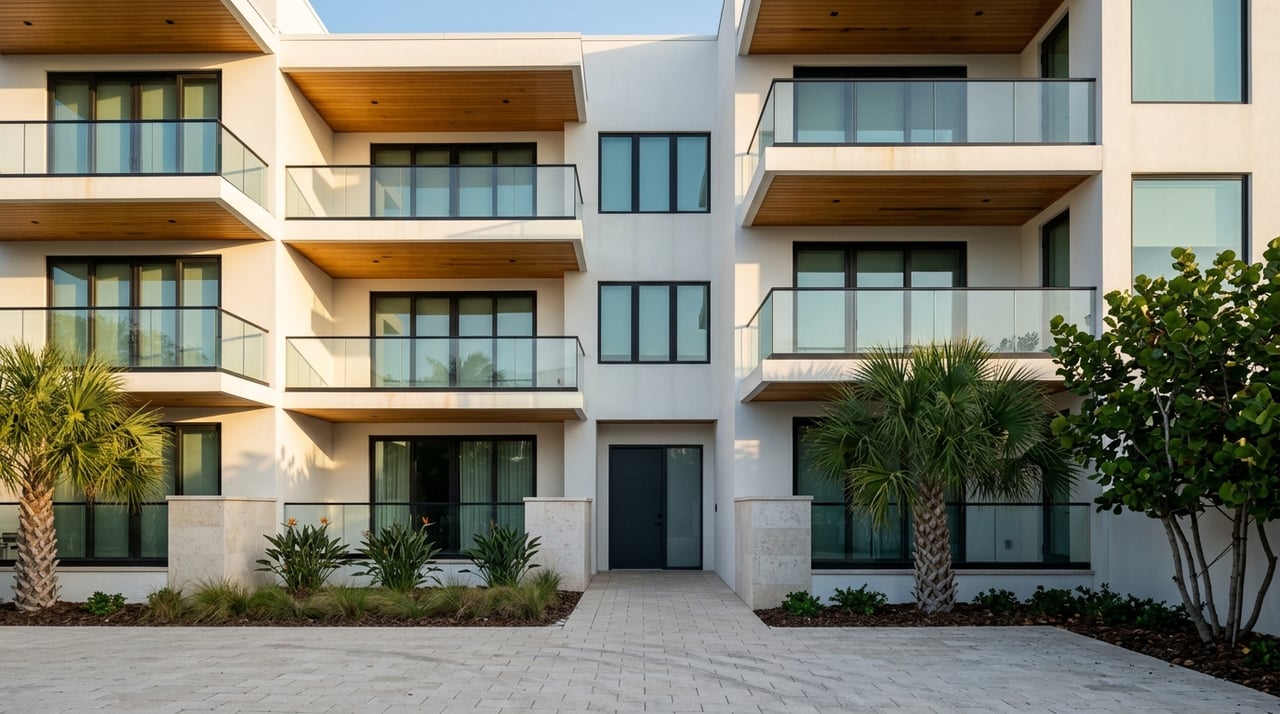
Buying a Gulf Coast Beach Condo as a Second Home
July 16, 2026
July 16, 2026
Dreaming about a Gulf Coast beach condo you can slip away to on weekends or enjoy for a longer seasonal stay? That vision is easy to love, but the smartest second-home buyers know a beach condo is more than a pretty view and a great balcony. If you are considering a condo near The Pines and the broader Gulf Coast lifestyle from this part of Florida, this guide will help you think through access, fees, rules, insurance, and the condo documents that matter most. Let’s dive in.
A second home should feel easy to use. On the Gulf Coast, that convenience can change quickly depending on where the condo sits, how many bridge crossings are involved, and what beach access looks like day to day.
Official Gulf Coast beach guidance for the Lakewood Ranch area shows how distance can vary even within a popular coastal region. Lido Key is about 15 miles away, Siesta Key about 18 miles, Bradenton Beach about 21 miles, Longboat Key about 22 miles, and Anna Maria Island about 24 miles. For a second-home buyer, those differences can shape how spontaneous the home feels for a quick getaway.
Longboat Key also highlights another important point. As a barrier island between the Gulf of Mexico and Sarasota Bay, it has public beach access points where parking may be available in some places and unavailable in others, and the town notes ongoing beach-management and nourishment work. In practical terms, details like parking, access, and local beach conditions can affect your routine, your guests, and your overall experience.
Before you fall in love with a floor plan, think about how you will actually use the condo. A second home works best when it matches your real habits, not just your vacation-day imagination.
Ask yourself a few simple questions:
These answers help narrow the right fit. They also make it easier to screen condo communities before you spend time touring properties that may not align with your goals.
A condo is not just a unit. In Florida, it is a form of real property that includes your unit plus a shared ownership structure involving common elements.
According to Florida’s DBPR condo buyer guidance, the association is responsible for operating the condominium and maintaining common facilities such as pools, tennis courts, and elevators. The declaration of condominium defines unit boundaries, common elements, and maintenance responsibilities, which is why the documents are so important.
That means two condos with similar square footage and similar views can come with very different ownership responsibilities. What you own, what the association maintains, and what you may need to repair or insure personally can vary from one building to another.
Florida’s DBPR advises buyers to review key condo documents before making a final decision. Those materials can tell you far more than the listing photos ever will.
Important items to review include:
You should also ask specific questions about:
Monthly condo fees are one of the biggest factors in second-home ownership. The number itself matters, but what matters even more is what is included.
Under Florida law, common expenses can include operation, maintenance, repair, replacement, and protection of common elements and association property. They may also include items like directors-and-officers insurance, road maintenance, in-house communications, and security services when those services benefit unit owners.
In some beach or luxury communities, the structure can be more layered. Florida law allows associations to acquire leaseholds, memberships, and other use interests in facilities like marinas or recreational amenities, and those costs may be treated as common expenses depending on the declaration.
Before you buy, ask for a clear breakdown of the monthly fee and any separate charges. You want to know not just the current cost, but the reason behind it.
Ask whether the fee covers:
If the condo is a second home, this clarity is especially valuable. You may not be there full time, so understanding your fixed carrying costs is essential from the start.
For coastal condo buyers in Florida, structural due diligence is no longer optional. It should be part of your screening process from the very beginning.
Florida law requires milestone inspections for buildings that are three habitable stories or higher by the 30-year mark and every 10 years after that. Residential condominium associations for those buildings must also complete a structural integrity reserve study at least every 10 years after creation.
This matters because reserve planning affects your future costs. Florida law warns that waiving reserves can expose owners to unanticipated special assessments, and reserve funding may come from regular assessments, special assessments, lines of credit, or loans in circumstances allowed by statute.
When you are evaluating a condo, ask for:
A beautiful unit can still come with major building-level costs. If you are buying a second home, you want the lifestyle to feel relaxing, not financially surprising.
One of the most common buyer misunderstandings is assuming the association’s insurance covers everything. In a Florida condo, that is not how it works.
Florida law requires the association to use its best efforts to maintain adequate property insurance, but the association policy does not cover personal property inside your unit and excludes many interior items such as floor coverings, appliances, cabinets, and window treatments. Those items are the unit owner’s responsibility.
For you, that means condo ownership usually involves two layers of protection. The association covers certain building-level risks, while you may need your own policy for interior items, personal property, and other owner responsibilities.
On the Gulf Coast, flood risk should be part of every second-home conversation. Florida’s condo-sale disclosure states that homeowners insurance does not cover flood damage and encourages separate flood insurance coverage.
Florida law also requires sellers of residential real property to provide a flood disclosure at or before contract execution. Since October 1, 2025, that disclosure must address whether the seller knows of prior flooding, filed flood claims, or received flood-related assistance.
That makes flood due diligence much more direct. You should confirm the association’s coverage, your potential owner-level coverage needs, and your possible deductible exposure before moving forward.
Many buyers like the idea of occasional rental income to help offset carrying costs. That can be a reasonable goal, but rental flexibility should never be assumed just because a condo is near the beach.
Florida condo use restrictions are document-driven. The declaration may set minimum lease terms, limit the number of rentals, restrict guests or pets, or create additional fees tied to recreation access or master-association costs.
Florida law also says that an amendment that prohibits renting, changes rental duration, or limits the number of rentals applies only to owners who consent to the amendment and to buyers who acquire title after the amendment becomes effective. That is one more reason the timing and wording of the documents matter.
If rental flexibility matters to you, ask these questions early:
A condo that feels perfect for personal use may be a poor fit for rental goals, and the reverse can also be true.
Florida gives condo buyers important document review protections. For resale purchases, buyers have a 7-day cancellation window after receiving the required condo documents, annual financial statement, and budget.
For developer sales, the voidability period is 15 days. Developer sales also require an estimated operating budget and a schedule of unit-owner expenses, but Florida law clearly states these figures are estimates, not guarantees.
This is your window to slow down and review the fine print. If a building has layered ownership, such as a portion of a building or a multiple-parcel structure, Florida law may require additional disclosure as well.
Before you tour beach condos for a second home, it helps to have a short list of screening questions ready. That can save time and help you focus on properties that truly fit your goals.
Use this checklist:
When you screen condos this way, you move from emotional shopping to informed decision-making. That is especially helpful when the property is both a lifestyle purchase and a significant financial asset.
A Gulf Coast beach condo can be a wonderful second home, but the best purchase is rarely the one with the flashiest sunset photo. It is the one that fits how you want to live, what you want to spend, and how much flexibility you need.
If you are exploring beach-area condos from The Pines, Lakewood Ranch, or nearby Gulf Coast communities, a thoughtful plan can make the process smoother. With the right questions and the right local guidance, you can focus on the properties that truly support the lifestyle you want.
When you are ready for a polished, detail-focused approach to Gulf Coast condo buying, connect with Argelia Vidal for trusted local insight and personalized guidance.
Stay up to date on the latest real estate trends.

Lakewood Ranch
Subtle Charms and Hidden Gems: Discover Lakewood Ranch’s Captivating Sights.

Lakewood Ranch, FL.
How to Know What's Right for You in Lakewood Ranch, FL.

These favorite outdoor pastimes enhance life in Lakewood Ranch.

The Smart Home Features Buyers Want Most in Lakewood Ranch.

A Clear Guide to Real Estate Contingencies for Buyers and Sellers.
What to Expect from Golf and Country Club Living in Lakewood Ranch.

A Local's Guide to the Hidden Gems in Lakewood Ranch.
We pride ourselves in providing personalized solutions that bring our clients closer to their dream properties and enhance their long-term wealth.